
The Vanity Treadmill of Modern Content Production
Enterprise marketing teams are often measured by what they publish: articles shipped, landing pages launched, videos produced, markets localized, and campaigns activated. That makes volume easy to report and politically attractive. A larger publishing calendar appears to signal momentum, responsiveness, and ambition. Yet a growing output line does not automatically create greater visibility or revenue. In many organizations, it simply produces more assets that require review, maintenance, distribution, measurement, and eventual retirement.
The problem becomes especially serious when every new brief is treated as an independent growth opportunity. Over time, the library fills with overlapping pages, outdated claims, thin variations, and assets whose original search intent has shifted. Authority becomes diluted across too many URLs, while search engines and users must work harder to identify the most useful answer. The result is not just content decay, but operational drag: fragmented knowledge, inconsistent messaging, weaker internal linking, and wasted attention across editorial, SEO, product, and revenue teams.
The alternative is a Sustainable Velocity Model. It does not mean publishing less for its own sake. It means matching production to the organization”s ability to create distinctive assets, maintain existing ones, close meaningful topic gaps, and move qualified buyers forward. Sustainable velocity treats content as a managed portfolio rather than an endless queue. The central question shifts from “How many pieces shipped?” to “Which assets are improving authority, accelerating decisions, and producing durable commercial value?”
The Hidden Toll of Library Bloat and Content Decay
Content decay is the gradual loss of performance experienced by a digital asset over time. Organic clicks may decline, rankings may weaken, conversions may fall, or an article may become less useful because regulations, products, competitors, and buyer expectations have changed. Decay is natural, but its pace is influenced by the quality of the original work, the competitiveness of the topic, the frequency of meaningful updates, and changes in search results. A page published two years ago may still be a valuable asset, while another can become commercially obsolete within months.
Large enterprises face an additional form of decay: institutional memory loss. Decisions made during briefing may remain in email threads, project-management comments, Slack messages, or personal documents rather than in a durable knowledge system. When a related brief arrives, the team has to reconstruct the rationale, evidence, audience definition, and approval history. This creates organizational debt. Adding automation to such a workflow can increase output while preserving the underlying confusion, because faster production does not repair missing context.
Library bloat also creates technical and strategic consequences. Search engines may spend time crawling low-value, duplicated, or outdated URLs instead of discovering important pages. Similar articles can compete for the same query, weakening the signals associated with each page and making performance harder to interpret. Internal links become less intentional, orphaned assets accumulate, and reporting must distinguish between genuine growth and traffic distributed across a larger but less coherent library. A useful foundation for managing this lifecycle is the established discipline of content strategy and governance.
| High-volume production | Sustainable velocity |
|---|---|
| Success measured primarily by published asset count | Success measured by qualified visibility, asset health, and pipeline contribution |
| Briefs organized around isolated keywords | Briefs mapped to topic systems, buyer intent, and business priorities |
| Updates performed reactively after major decline | Refresh windows, ownership, and decay signals defined in advance |
| More URLs added before existing gaps are diagnosed | Existing assets consolidated, strengthened, and linked before expansion |
| AI used mainly to increase draft throughput | AI used within governed workflows with structured source material and human accountability |
Architecting Topical Completeness Over Isolated Posts
Search visibility is increasingly shaped by how clearly an organization covers a subject, not simply by how many pages contain a target phrase. Topical authority is not a formal Google score, but it is a useful operating model for building a coherent body of information. A strong topic system addresses the major questions, subproblems, comparisons, risks, and decision routes associated with a defined subject. Each page has a distinct purpose, and the pages are connected so that users and search engines can understand their relationships.
The practical structure is a pillar-and-spoke model. A pillar page provides orientation and defines the broader subject. Supporting pages address narrower intents, such as implementation, cost, compliance, troubleshooting, alternatives, or evaluation criteria. Internal links should connect the pillar to its spokes and relevant spokes to one another. This architecture is more useful than producing ten loosely related articles because it creates navigational logic, reinforces important concepts, and gives each asset a role across the buyer journey.
Enterprise teams should treat topic mapping as a gap-analysis exercise rather than a keyword collection exercise. The starting point is the organization”s core entity, products, audiences, and commercial priorities. From there, teams can combine search data, customer questions, sales objections, support tickets, product documentation, and regulatory requirements. Institutional guidance on information architecture and coordinated digital publishing is also reflected in Digital.gov content strategy standards.
- Define the primary business topic and the audiences that need information about it.
- Group queries by intent, including education, comparison, implementation, problem solving, and purchase evaluation.
- Assign each existing URL to a pillar, supporting cluster, consolidation candidate, or retirement queue.
- Identify missing evidence, unanswered questions, weak decision routes, and unsupported claims.
- Create deliberate internal-linking rules so every important page has a clear position within the topic system.
- Assign an owner and review interval for claims, examples, links, compliance requirements, and product details.
Completeness does not mean publishing every possible variation. It means covering the concepts that matter with enough depth and distinction to help a real audience make progress. A single authoritative guide supported by carefully differentiated assets can be more valuable than a large collection of near-duplicates. This is also where enterprise specialization becomes an advantage. Proprietary research, subject-matter expertise, customer evidence, product knowledge, and regulatory interpretation can create meaningful differentiation that generic, high-volume content cannot easily reproduce.
Calculating the Real ROI of Refreshing High-Value Assets
Refreshing an existing URL often has a different economic profile from commissioning a net-new draft. The existing asset may already have backlinks, historical rankings, indexed content, internal links, brand recognition, and accumulated conversion data. A new article starts with none of those advantages. Refreshing is not automatically the right answer, but it deserves a disciplined economic comparison before another page is added to the library.
A practical refresh viability formula can combine commercial value, recovery potential, and execution cost:
Refresh priority = expected incremental value multiplied by confidence of recovery, divided by refresh cost and maintenance burden.
Expected incremental value can include forecast organic conversions, assisted pipeline, qualified traffic, and the strategic value of protecting an important topic. Confidence of recovery should reflect the severity and cause of decay. A page affected by outdated statistics or weak internal links may offer a stronger recovery opportunity than one displaced by a fundamentally changed search intent. Refresh cost should include research, subject-matter review, legal approval, design, development, localization, analytics, and future maintenance.
- Detect: Review a sufficiently long performance window and examine click trends, impressions, rankings, conversions, and seasonality rather than comparing only two isolated periods.
- Diagnose: Determine whether decline comes from outdated information, competitor improvement, changed intent, technical problems, cannibalization, weak conversion paths, or a broader search-result change.
- Score: Rank pages by commercial importance, historical performance, recovery potential, strategic topic relevance, and effort required.
- Decide: Refresh, consolidate, redirect, repurpose, or retire the asset. Do not preserve a URL merely because it exists.
- Measure: Establish a post-refresh review period and track qualified traffic, engagement, conversions, pipeline influence, and ranking coverage.
This approach creates a portfolio view of content investment. A refresh should not be judged only by traffic recovery, especially for pages that support high-value sales conversations or protect trust in regulated categories. Conversely, a traffic increase without qualified engagement or pipeline progression may not justify substantial editorial effort. Enterprise benchmarks should be customized to business units, markets, funnel stages, and content types rather than borrowed from generic industry averages. Structured content operations, connected analytics, and clear governance make this evaluation more reliable, particularly as AI increases the volume of possible drafts and adaptations.
Aligning Content Operations with Pipeline Acceleration
Sustainable velocity becomes commercially meaningful when asset health is connected to buyer movement. A refreshed comparison page can help a prospect progress from research to evaluation. A stronger implementation guide can reduce objections during a sales cycle. A well-linked cluster can help a buyer move from an educational question to a product-specific decision without leaving the company”s information environment. These outcomes require content teams to measure more than sessions and rankings.
Editorial and revenue operations should agree on a practical measurement framework. The exact benchmarks will vary by business, but the operating principle is consistent: compare content performance against the role an asset is expected to play. A top-of-funnel guide may be evaluated through qualified reach and assisted conversions, while a decision-stage page may be assessed through demo quality, opportunity progression, influenced pipeline, and sales usage. Custom benchmarks can be maintained by segment, market, funnel stage, and content type, allowing leaders to distinguish meaningful improvement from superficial volume.
- Track the percentage of priority assets with current owners, review dates, and documented source evidence.
- Measure qualified organic sessions and conversion rates by topic cluster, not only by individual URL.
- Connect content interactions with lead quality, opportunity creation, sales-cycle progression, and revenue influence.
- Record which assets sales and customer-facing teams use in active buyer conversations.
- Review decay, consolidation, and refresh outcomes in the same operating meetings as new production plans.
Feedback loops are essential. Sales teams can identify recurring questions that are not answered clearly. Customer success can surface implementation friction. Product and legal teams can flag changes that require immediate updates. SEO teams can identify cannibalization, declining query coverage, and technical barriers. When those signals feed a shared backlog, content maintenance becomes a revenue capability rather than an editorial afterthought. Connected systems across the CMS, digital asset management platform, CRM, workflow tools, and analytics layer can support this model, but governance must define ownership, review standards, provenance, and human approval.
Build a High-Yield Content Engine for the Long Term
The shift from volume to sustainable velocity is an operational transition, not a temporary reduction in publishing ambition. Enterprise teams still need consistent production, but every new asset should strengthen a defined topic system, address a meaningful buyer need, or create evidence that competitors cannot easily duplicate. Existing assets must receive comparable strategic attention. Without that balance, production expands faster than the organization”s ability to maintain authority, accuracy, and conversion paths.
Leadership can establish the model within the next fiscal quarter by making three structural changes:
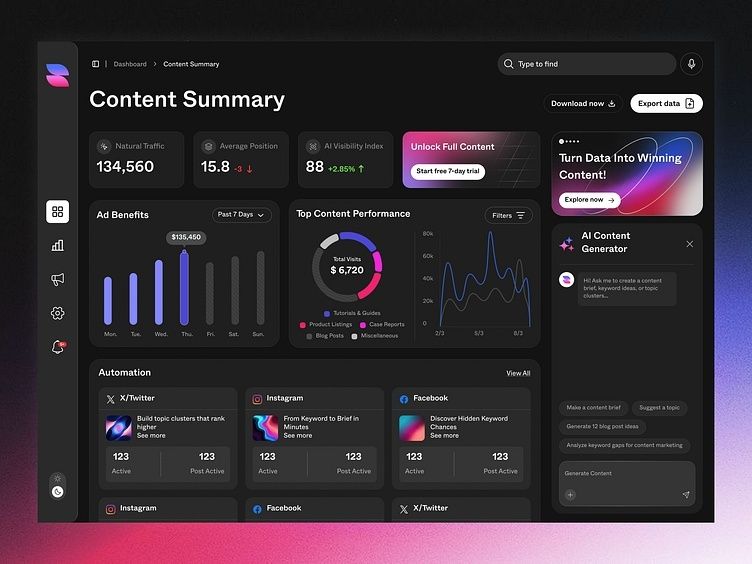
- Replace output-only reporting: Add asset health, topic coverage, qualified visibility, refresh performance, and pipeline contribution to executive dashboards.
- Create a governed content portfolio: Assign owners, review intervals, consolidation rules, evidence requirements, and retirement criteria across priority clusters.
- Unify editorial and revenue feedback: Connect search data, customer questions, sales usage, opportunity progression, and refresh decisions in one operating rhythm.
The strategic advantage is straightforward. Organizations that protect topical authority and maintain high-value assets compound the value of past investment. Organizations that chase vanity output compound complexity instead. Sustainable velocity gives enterprise marketing a clearer path to durable organic growth: fewer redundant pages, stronger information architecture, better use of expert time, and content that helps qualified buyers make confident decisions.